
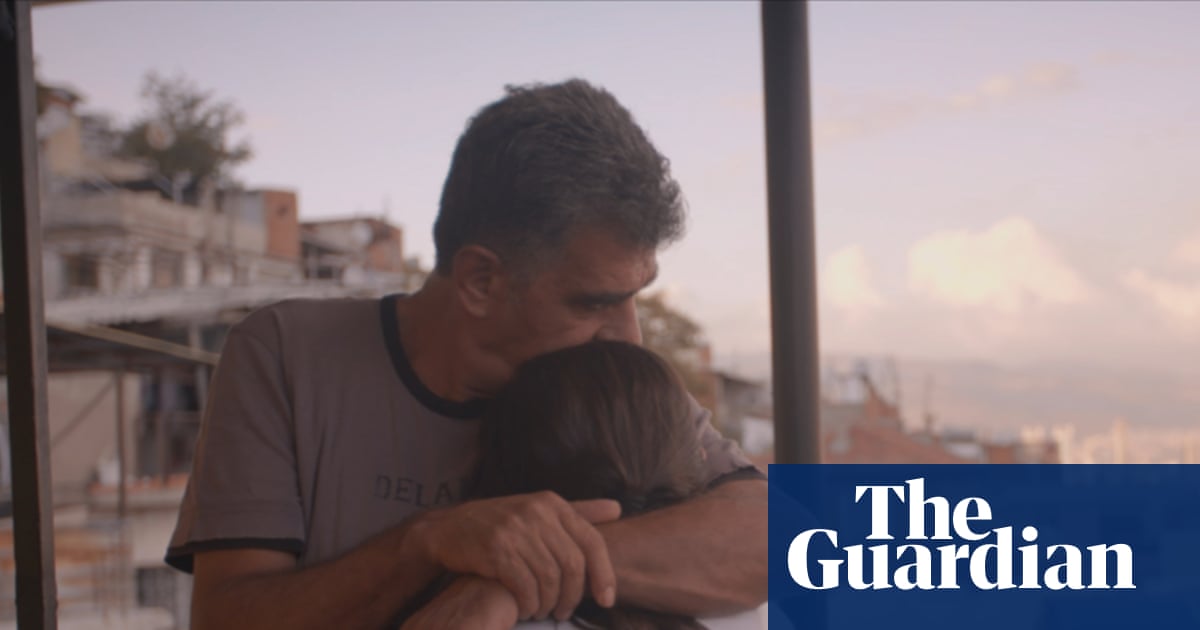
In 2015, filmmakers Itab Azzam and Jack MacInnes met 11-year-old Israa, a Syrian refugee who had left Aleppo with her parents and siblings to seek a new life in Europe.
That year, Israa calmly explained how her family would survive if their dinghy sank while crossing from Turkey to Greece. Her father would hold her disabled sister, and her mother would care for the baby. “And I,” she said, smiling, “I know how to rescue myself.”
Azzam and MacInnes, a married couple, met Israa while filming Exodus, a BBC series about refugees trying to reach Europe. They planned to follow her family to Germany. After Israa reached safety, they continued filming. The result, the documentary One in a Million, was made over ten years and shows Israa growing from a 11-year-old into a young woman who is married and has a baby.
First Meeting in İzmir
Azzam and MacInnes first saw Israa in İzmir, on the Turkish coast, where she was selling cigarettes with her father to raise money for people smugglers. Azzam, who is also Syrian, recalled that Israa approached them and began talking. The family invited them back to their flat. The family had fled Aleppo after their home was destroyed by a missile.
Israa joked about the risk of the dinghy sinking. Her father, Tarek, was more worried. “I’m gambling with the lives of my children,” he says in the documentary. Months earlier, the body of three-year-old Syrian boy Alan Kurdi had washed ashore in Turkey. Before the crossing, Tarek told the filmmakers: “If anything bad happens to us, you have to tell our story.”
Azzam described İzmir as a hub for the people-smuggling trade. “You saw lots of families putting life jackets on their children,” she said. MacInnes added that some people were selling fake life jackets that did not work.
The Journey to Germany
After the family landed in Greece, they joined the wave of refugees moving through Europe, which MacInnes described as the largest movement of people since the Second World War. Israa walked through mud and freezing rain carrying her baby brother, while her parents pushed her sister in a wheelchair. The filmmakers travelled with them, sleeping in the street and taking refugee trains and buses. The family’s journey ended in Cologne, where they settled.
Azzam said the filmmakers continued documenting the family because the story had changed. “Then there was a lot of talk about integration: will these people integrate in Europe? So we kept filming to cover that. Then it became a film about a family and love.”
Life in Germany
In Cologne, Israa learned German in five months and started school. At 12, she chose not to wear the hijab, a decision she later reconsidered. Her relationship with her father became strained. The documentary also follows changes in the family’s roles. Tarek, who had run a falafel restaurant in Aleppo, struggled to adjust in Germany. Israa’s mother, Nisreen, who was a background figure at the start of the film, becomes a central presence.
The film also shows a serious moment. When Israa was 14, she told MacInnes that her father had been hitting her. MacInnes said the crew then prioritised her safety over filming. He did not describe the details of what followed beyond the film’s own account.
Funding and Final Years
The filmmakers spent three years searching for financial backing. They worked full-time jobs and put production costs on credit cards. MacInnes said they were at least £40,000 in debt at one point.
The filmmakers had planned to stop filming when Israa turned 18. However, she later married Mohammed, who also arrived in Germany from Syria as a child refugee. In late 2024, the Assad regime fell. The film opens and closes with footage of Israa returning to Aleppo.
Azzam, who is from the Druze religious minority in Syria, said her own family lives in London and that her village was destroyed during clashes in southern Syria. Israa, now in her early 20s and with two young children, is training to be a civil servant in local government. Speaking by video call, she said she trusted Azzam from the moment they met and that their relationship became a close friendship. She said she cried through the first time she watched the film. Reflecting on her journey as a mother, she said: “I am very proud of them because they took this decision and went on this journey with us.”