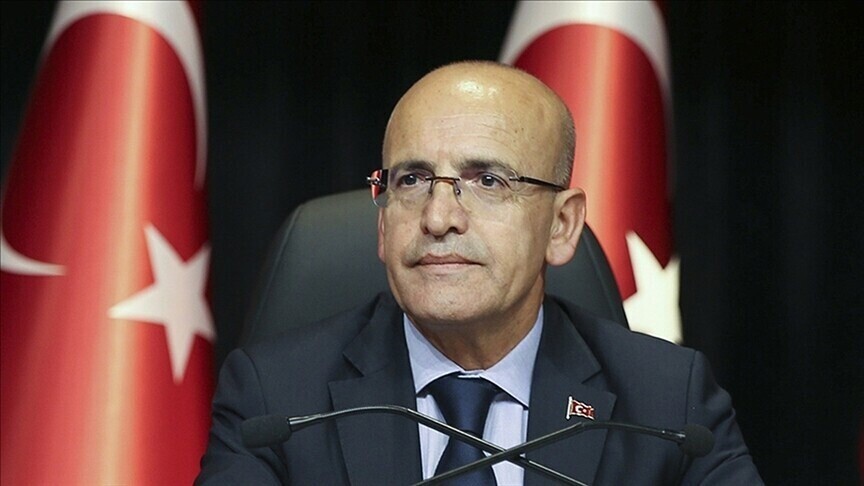
Treasury and Finance Minister Mehmet Şimşek said the liquidation of funds is proceeding at the pace and within the framework originally envisaged. He spoke during a joint broadcast by BloombergHT and HaberTürk.
Şimşek said the liquidation is guided by transparency, efficiency and fairness.
Ordinary and extraordinary liquidation
Şimşek said the Capital Markets Board (SPK), the Central Registry Agency (MKK) and other relevant institutions have completed their preparations. The liquidation has been divided into two categories: ordinary and extraordinary.
Ordinary liquidation has been applied to portfolio management companies whose financial structures are relatively manageable. Şimşek said 131 funds managed by seven portfolio management companies have been placed under liquidation. He added that 66 of these funds have been fully liquidated.
Şimşek said the full liquidation of three of the seven companies has been completed. He said 40.8 billion lira has been paid to 45,747 accounts.
He stated that investors in money market funds at the three companies under ordinary liquidation received an average additional dividend of 1.43 percent compared with 17 September. He said investors in equity-heavy funds received on average 58 percent of their portfolio value as of 17 September. He attributed the remaining 42 percent difference to falls in share prices, which he said had previously been inflated. He added that funds with non-inflated share prices received higher returns.
Hedef Portfolio Management
Şimşek said the SPK recently decided to place the funds of Hedef Portfolio Management Company under ordinary liquidation. The company manages 31 funds, four of which are money market funds, and has 23,925 accounts.
He said the aim is to complete the ordinary liquidation process for Hedef this week. He added that, if this is achieved, four of the seven portfolio management companies will have completed ordinary liquidation by the weekend.
Extraordinary liquidation
Şimşek said three relatively large portfolio management companies remain: Tera, Pusula and Atlas. All three are now under extraordinary liquidation.
He said the owners of Atlas have been in dialogue with the liquidating institution for some time and have expressed willingness to return certain assets, values or fund resources that were moved out. He said negotiations are ongoing and measures have been taken regarding the owners. According to the liquidating institution, a portion of the fund's resources was transferred out, and discussions concern the return of those resources.
Şimşek said that after the bill in the Grand National Assembly of Türkiye (TBMM) is adopted, payments of up to 1 million lira will be made to small investors and money market fund investors at companies under extraordinary liquidation, with priority given to them. He said this would cover approximately 390,000 accounts. He noted that this applies to extraordinary liquidation and not to accounts under ordinary liquidation.
Investigation and refunds
Şimşek said the Savings Deposit Insurance Fund (TMSF), the Ministry of Justice and the Central Registry Agency are working together. He said an algorithm developed by the institutions has identified everyone who engaged in market-disrupting activities and profited from them, from the creation of these funds to their liquidation. He said the list has been submitted to the TMSF and the Ministry of Justice.
He said 132 accounts have been opened: one for each of the 131 funds under TMSF management and one general refund account. He said funds will flow into these accounts through two channels, voluntary refunds and a legal process. He said thresholds have been set, and that individuals and companies that realized real gains of 10 million lira or more will be contacted first. He said the calculation will be adjusted using TEFE-TÜFE, the producer and consumer price indices. He added that those who voluntarily return gains will face no further issues, while the Ministry of Justice will pursue legal proceedings against those who do not.
Şimşek said investors' remaining rights in the funds are preserved and that legal action will be taken. He said the personal assets of those who acted together may also be pursued.
Regulatory reform
Şimşek said capital markets will emerge from this process in a much healthier structure. He said the Treasury and Finance Ministry had prepared a draft of a permanent reform while submitting the temporary liquidation regulation to parliament. He said liquidation was prioritized and structural reforms would be handled more calmly.
“We will adopt a very comprehensive approach aimed at market-disrupting activities, coordinated transactions and trading based on insider information, one that significantly increases sanctions and strengthens supervision before sanctions are applied. We will strengthen the institutional capacity of the relevant bodies. The market is highly sophisticated, with advanced algorithms and coordinated movements, so we will need to use these technologies too.”
He said the human resources of the supervisory bodies will be strengthened, including through pay adjustments and contract-based positions. He also said that several hundred experienced tax inspectors from the Tax Inspection Board, which he said has more than 7,100 inspectors, could be transferred to relevant institutions under a legal framework. He added that any gaps in legislation will be addressed.
Şimşek said the capacity of the institutions carrying out oversight and supervision will be redesigned and strengthened. He said the Treasury and Finance Ministry has trained personnel and that a legal arrangement will transfer significant temporary or permanent human resources to these areas.
On the new regulations, Şimşek said: “Most of the loopholes used for manipulation were closed with the fund guide. This is an important step but not sufficient. We are therefore working on further regulation, and we hope our parliamentary group will finalize it and submit it to the TBMM this year. The implementation of the fund guide will not be postponed.”
He said the government will take into account the risk of excessive regulation and will engage in dialogue with the sector. He said he had asked officials to meet managers of 20 major funds that have not been involved in manipulation. He also said the regulations will be discussed with the sector, and that the fund guide would not have been issued had sector demands been fully accommodated.
Şimşek also said ongoing sanctions on coordinated transactions and the verification of free float ratios are very important. He said an independent institution's confirmation of announced free float ratios is significant, as manipulation largely stems from problems with free float. He said studies are underway on whether free float ratios are adequate and whether funds sold to retail investors should be open to TEFAS. He said a comprehensive regulation will be prepared and consultations with the sector are expected in the coming month, before the regulation is submitted to parliament.