
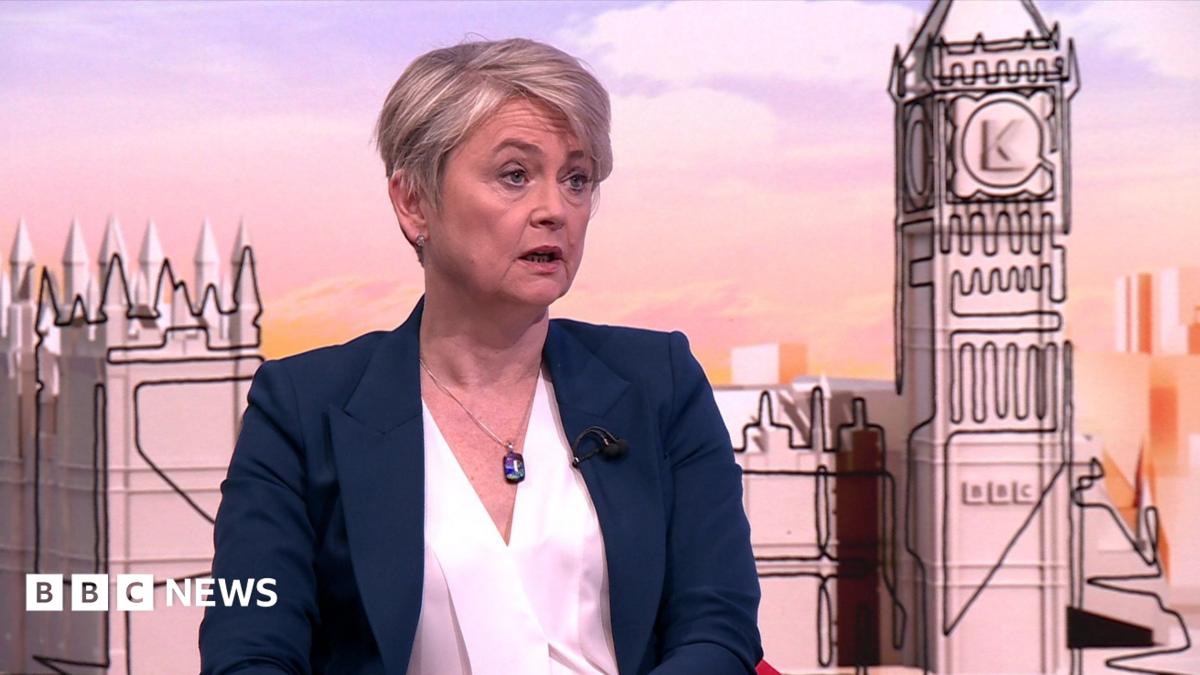
The NHS must take urgent action to stop children receiving treatment in hospital corridors, Health Secretary Yvette Cooper has told the BBC.
Cooper said she has asked NHS England to draw up urgent plans to eliminate what is known as “corridor care” for children as a priority. She also wants new standards for how children should be treated at A&E.
The move follows calls from more than a dozen health groups for the government to act to end corridor care.
Waiting Times and Data
The number of people waiting more than 12 hours in A&E departments, from a decision to admit to actually being admitted, stood at 50,582 in September. This was up from 44,951 in August.
Cooper said the way this data is collected will change so that the number of children is included in the figures.
“I’m clear that child health needs to be a much greater priority for the NHS,” Cooper said. The government aims to end corridor care more broadly by the end of this parliament, she added.
A Family’s Story
Laura Kuenssberg highlighted the case of Finlay Roberts, a two-year-old boy who died in 2024 after spending the final hours of his life in a crowded A&E corridor.
His father, David Roberts, told the BBC the situation was a “terrible mess”. The family was briefly moved into a room with a bed, then moved back into the corridor.
“He just clung to me, as we now know, slowly dying,” he said.
His mother, Liz Roberts, said corridor care “robs people of their dignity when they are at their most vulnerable”. She recalled being told to administer a suppository to Finlay in the corridor because there was no other option.
After hearing their story, Cooper apologised to Finlay’s parents on behalf of the NHS.
“No child should be treated in a corridor. No patient should be treated in a corridor,” she said.
Whittington Health NHS Trust, where this happened, extended its condolences to Finlay’s family. It said it continues to experience periods of exceptional demand across emergency care, and at times some patients may receive care in temporary clinical areas, including corridors.
“Our staff work tirelessly to provide safe and compassionate care in extremely challenging conditions,” it said.
Winter Pressures
On Friday, 16 health groups, including Age UK, Marie Curie and the Royal College of Nursing (RCN), wrote to Cooper urging her to act on ending corridor care. The letter said the practice is fundamentally incompatible with NHS care standards and would require “whole-system action” to eradicate it.
Cooper had warned that the NHS faces a more challenging winter than normal, after multiple heatwaves led to its busiest summer on record in England. She announced £140m to boost urgent care capacity to deal with seasonal illnesses, including flu and norovirus. The money will go to 14 schemes across England, including new urgent care centres, ambulance fleets and emergency department upgrades.
Shadow health secretary Damian Hinds said the government needed to act, but asked it to explain where the money was coming from. RCN England said the funding was “just another sticking plaster”.
In a statement, Cooper said: “Winter will be more challenging for our NHS this year, after such a heavy summer. That’s why we have been preparing early and investing in extra urgent care capacity to help get patients the care they need.”
Almost 7.3 million people attended A&E between June and August in England, according to NHS data. This is the highest figure ever recorded for a summer period.
The King’s Fund warned the service faces a “twin crisis” going into winter, with little time between peak periods for staff and the system to recover.
NHS leaders are urging eligible people to get flu vaccinations. Medical director Prof Frankie Swords said there were “ominous” signs of winter pressure already affecting hospitals. She said earlier this month there were more patients coming to A&E with flu and other respiratory viruses than usual for this time of year.
“And unfortunately, people are still waiting longer than we would like them to,” she added.
RCN England’s executive director Patricia Marquis said the extra money was welcome in the short term but would ultimately provide “just another sticking plaster on a system that is at breaking point”. She said the nursing workforce goes into winter “already running on empty and short of staff”.
Routine Waiting List
The waiting list for routine hospital treatment in England rose for the second month in a row. An estimated 7.37 million treatments were waiting to be carried out at the end of August, relating to 6.24 million patients.
These were the highest numbers since October 2025. They have raised questions about whether the NHS will meet the government’s target to treat 92% of patients within 18 weeks by 2029.