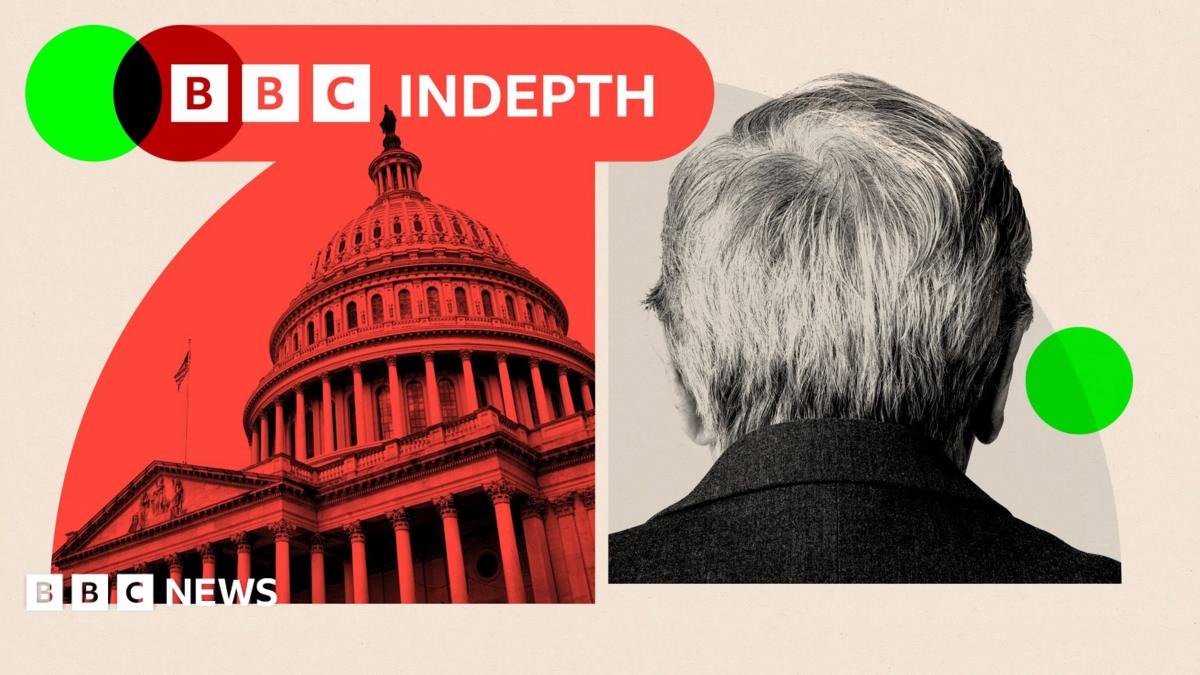
Few US politicians have stayed in office as long as Hal Rogers. The 88-year-old Republican will seek a 24th term in the House of Representatives in November's midterm elections.
Rogers has represented Kentucky's 5th congressional district since 1981, making him the longest-serving member of the House. He was first elected on the same night Ronald Reagan won his first presidential term, under the slogan “Let's make America great again”, a phrase later revived by Donald Trump.
Rogers beat a challenger 60 years his junior to win his party's nomination this year. He is not the only senior figure in US politics. Trump is 80. Joe Biden left office at 82, and Nancy Pelosi stepped down as House Democratic leader at the same age. Republican Senator Chuck Grassley, 93, entered politics in 1958, before Alaska and Hawaii became states.
Concern over age and health
The age and health of some politicians have raised concern in both Republican and Democratic circles. The debate has revived questions about whether age limits or health checks should be introduced.
The US is often described as a “gerontocracy”, a government led by people who are much older than most adults in the country. At the other end of the age range, the US has one of the lowest proportions of lawmakers under 45 among comparable democracies, according to research from the Inter-Parliamentary Union.
A young candidate runs for Congress
Riley Owen, a 27-year-old Republican, is one of the few Gen Z candidates from either party running for Congress on 3 November. He is standing in a newly created district in Utah that experts say may lean towards the Democrats.
Owen has backed paid maternity leave, limits on congressional stock trading and environmental action. Those issues may also appeal to Democratic voters. When he was confirmed as his party's candidate in Utah's 1st congressional district, he walked on stage to Billy Joel's “We Didn't Start the Fire”. He argued that his generation must help renew the American Dream.
Owen says the age problem is bipartisan. “We've got people who have become career politicians, and they spend their lives in Congress,” he says. He believes this reflects a system that is not delivering for Americans.
He acknowledges that money is a major obstacle. Research suggests campaign donors tend to prefer incumbents. His rival, Ben McAdams, a 51-year-old Democrat who has previously served in Congress, has raised far more than Owen. By mid-October, McAdams had raised over $2.6 million (£1.9 million), compared with $150,000 for Owen, according to Federal Election Commission records.
Owen says his generation is well placed to understand issues such as the challenges posed by technology. He also rejects the idea that younger candidates necessarily lack experience, pointing to his background as a military officer and a White House policy analyst. “I think in politics, just like in industry, we need what's called disruptive innovation,” he says.
A long-running debate
The age of America's leaders has long been a subject of debate. In 1984, Reagan, then the oldest president at 73, responded to questions about his age with a quip about the “youth and inexperience” of his opponent, Walter Mondale, who was 56.
Many members of Congress begin their careers in state legislatures, which also have Senate and House chambers. However, the median age of Congress has risen over time. Congressional records show that the lowest median ages in the House and Senate were both recorded in the early 1980s, at 48 and 52 respectively.
According to Pew Research Center analysis, the average age of a House member and a senator at the start of the current Congress was 58 and 65. The median age of US citizens is 39.
Scrutiny of the health and mental acuity of the nation's oldest politicians has also intensified. Biden's age became a major issue while he was in office, and Trump has faced some questions too. Republican Senator Mitch McConnell, 84, has increasingly been asked about his health after a months-long absence from Congress for medical treatment. Meanwhile, Democrat Maxine Waters, 88, faces a leadership challenge as the lead Democrat on the powerful House Financial Services Committee. Some believe her age counts against her.
Youth movements and the left
Some of the strongest critics of the gerontocracy are candidates who identify as democratic socialists. Their views are further to the left than the Democratic Party mainstream. They tend to campaign heavily on the cost of living and other issues that resonate with Millennials and Gen Z, and their supporters are generally younger.
Grace Mausser, co-chair of the New York City branch of the Democratic Socialists of America, campaigned for Zohran Mamdani, who won last year's race to become New York City's mayor at 34, the youngest in the post since 1892. Mausser says age matters less to her than outlook. “You become so used to the language and the ideas of the political establishment that anything else - any new ideas, whether they come from young people or old people - seem crazy,” she says.
She points to Senator Bernie Sanders, 85, as an example of an older politician with a long career in Congress who has embraced change and whose ideas have resonated across generations.
Declining trust and turnout
Voters tend to skew older, like the officials they elect. Pew research shows that the share of young non-voters aged 18 to 29 has grown. In the 2020 US election, 25% of non-voters were in that age group. Four years later, the figure had risen to 30%. Pew also found that voters under 30 were underrepresented in 2024. They made up 20% of the voting-eligible population but only 15% of votes cast.
Campaigners say these trends matter because some issues receive less attention. Mausser argues that the age of voters can shape which issues politicians feel pressed to address.
Attitudes toward politicians also differ sharply by age. A Pew survey from spring 2025 found that 62% of 18- to 34-year-olds said few or none of their elected officials are honest, compared with 45% of people over 50. Among the 25 countries Pew surveyed, only young adults in Greece were more pessimistic about politicians' honesty.
James Sloam, a professor at Royal Holloway, University of London, who studies political engagement on both sides of the Atlantic, says disaffection helps explain why young people are reluctant to take part. Minimum age requirements also play a role. Candidates must be 30 to serve as a senator and 25 to serve as a representative. “The one leads to another,” Sloam says. “If you don't have enough young people engaged in politics generally, then they won't become representatives.”
Sloam adds that young people in the US and UK know power is not confined to politics. They see many other fields where they can exert influence, including over elected officials.
Family and the demands of office
For young people who reach high office, the question is whether they can balance the job with family life. This summer, the experiences of two young women working in Washington raised new questions about whether the role is compatible with motherhood.
Alexandria Ocasio-Cortez, 37, a Democratic congresswoman who took office at 29, announced that she had started the process of freezing her eggs.
In the same week in August, Karoline Leavitt, 29, said she would leave the Trump administration to spend more time with her family, including her newborn baby. Leavitt had been appointed the youngest White House press secretary in history almost two years earlier. She said she could not be the mother her two young children deserved while devoting the constant time and energy the role requires.
Only a handful of women have given birth while serving in Congress, and a few dozen lawmakers are parents of children under 18. The federal government, like many US employers, does not offer paid parental leave.
Vice President JD Vance, 42, one of the youngest vice presidents in US history, recently said that having young children could affect his decision on whether to run for the White House in 2028. “We've got four little kids,” he said.
A two-party system
Some observers also cite the two-party system as a barrier to young people's involvement. Sloam says it means only a relatively narrow range of views is represented. Research indicates that young people are more motivated by social movements and single-issue campaigns than by party politics.
Sloam points to Mamdani and other left-wing figures who appear to be attracting young supporters from outside the Democratic mainstream. He cautions, however, that this support is “a little bit sporadic at the moment”.
The Republican Party has also been reshaped over the past decade by Trump's MAGA movement, which drew many young men in the 2024 presidential election.
Sloam says more pluralistic political systems can boost youth engagement. Scandinavian countries, which are more likely to have multiple parties, offer a clear example. Governing parties there work with social movements to bring them into the political system. Citing Norway, Sloam suggests a cycle in which higher youth turnout and greater youth trust in the system lead to more political involvement.
Experience and competence
Some experts argue that certain lawmakers should know when to step aside. Voters, they add, should not overlook the value that comes with age, and should not equate age with competence.
Tracey Gendron, a professor of gerontology at Virginia Commonwealth University, whose research challenges the assumption that ageing always means decline, says: “Age alone is a very poor predictor of anything.” She notes that a 45-year-old experiencing depression or substance abuse may lack the cognitive capacity for the job, while an 85-year-old may have the integrity, judgement and wisdom to perform it well.