With two years left in his presidency, Donald Trump is facing elections that could prove pivotal. His influence on American politics over the past decade has been large and far-reaching.
The midterm elections on Tuesday will decide which party controls Congress. The vote comes at a difficult time for Trump's Republican Party.
Cost of living dominates the campaign
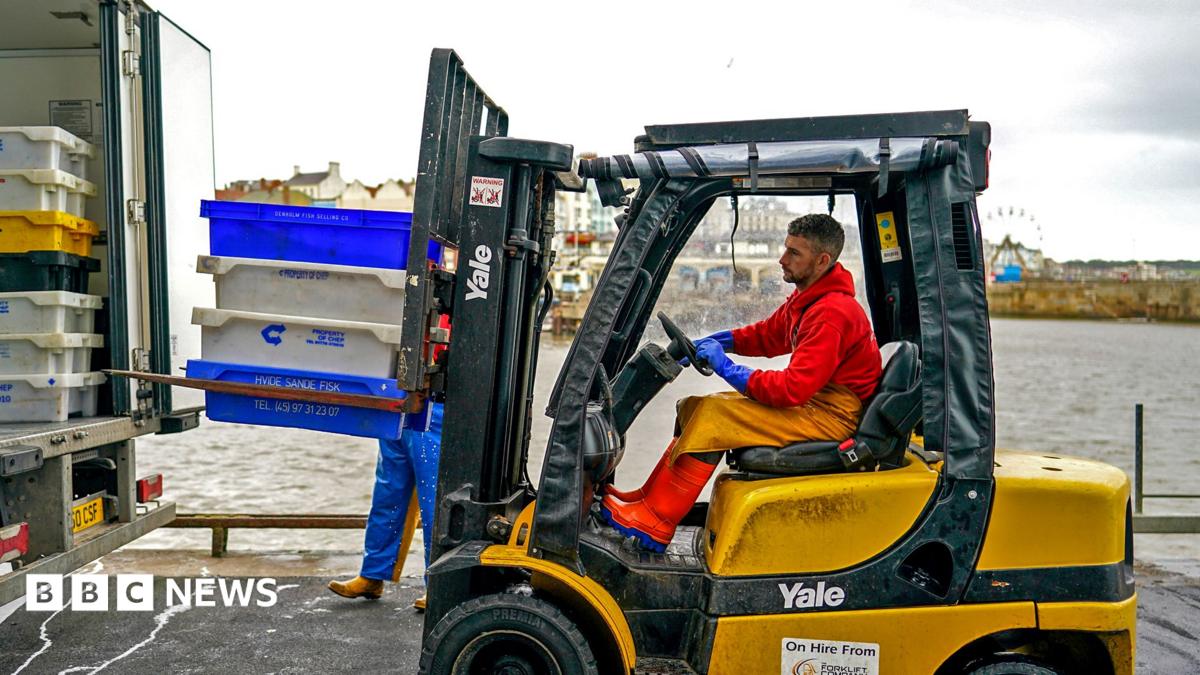
Voters say overwhelmingly that the cost of living is their main concern. Food and fuel prices have risen sharply, partly because of the president's aggressive tariffs and the unpopular war with Iran. Many voters are expected to keep these costs in mind when they cast their ballots.
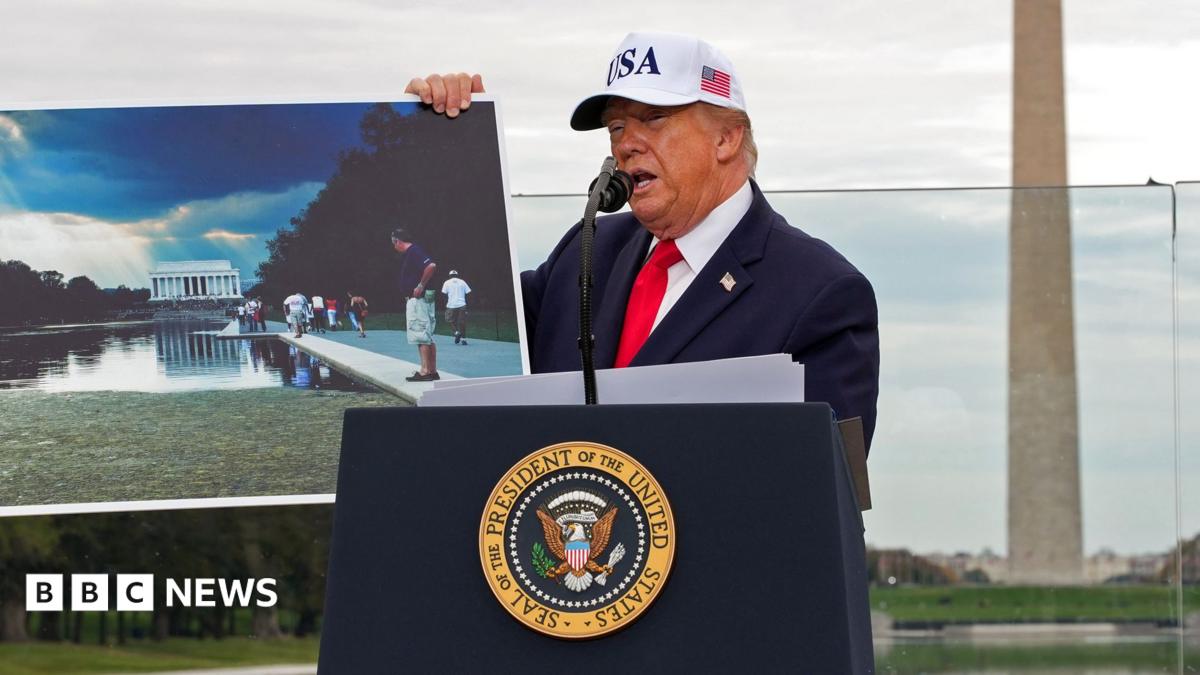
Trump has faced record-low approval ratings in recent months. He has campaigned hard, headlining dozens of rallies across the country. On Monday, he made his closing pitch in front of the Reflecting Pool in Washington DC, a site that has been the subject of a controversial renovation. Looking back on the campaign, he said Republicans “gave this a very strong shot.”
Republicans defend traditionally safe seats
High prices concern voters across the political spectrum. This helps explain why Trump has campaigned in traditionally Republican territory, including Iowa and Kansas, during a final weekend of campaigning.
The party has also spent hundreds of millions of dollars on campaign advertising in these usually safe contests, including the Senate race in Kansas.
Carrie Dann, managing editor of the Cook Political Report, which analyses campaigns and elections, told the BBC: “When they start spending hard American dollars on political advertising in a state that they should be winning, that’s how you know that they think they’re in trouble.”
“The spending [in Kansas] is going to be far more than Republicans ever anticipated,” she added. Her comments suggest a party that is approaching the elections on the defensive.
Is Trump still an electoral asset?
At many rallies, Trump has asked voters to imagine he is on the ballot. “In this election, I’m asking you to pretend, please, that I’m on the ballot,” he said last month. “Just pretend.” He made the same request in Iowa on Sunday.
He is not actually on the ballot. The request raises a central question: is he still an electoral asset for his party? The answer is no longer as clear as it once was.
Trump returned to the White House after a decisive win in the 2024 election, and his approval ratings were strong at the time. In the previous midterms in 2022, Republican candidates sought his endorsement, seeing it as vital to their success.
Now, the war with Iran is dragging on and hurting many Americans financially. Trump’s approval ratings have fallen. The price of a gallon of diesel, which was $3.75 before the war began in February, reached a record high of $6.52 in September.
Inflation has also risen, from 3% when Trump took office to 3.7% today. Economists estimate it would have been lower without his sweeping global tariffs.
Concern spreads to typically safe states
Republicans are worried that the economic picture has left them exposed in races that were considered safe, including in Texas, Ohio and Kansas.
Stephen Hawkins, global director of research at the pollster More in Common, said: “The southern states, the midwestern states, the American heartland - that is where Republicans tend to thrive. But that is where the Senate races that are so interesting are playing out right now.”
“Places where President Trump won by 10, 12, 15 points just two years ago in the presidential race are now states where Democrats have a very viable chance of taking a Senate seat,” he said.
In Iowa, a state Trump won in 2024 that has been hit by rising fuel and fertiliser costs, voters offered mixed views on how the president affects Republican support. Paul Ross, a Republican, said: “With the current climate, I would think possibly less, believe it or not.” He added that Trump might be detrimental to the party. Zach Shimp said: “I think it definitely puts voters off, there’s no doubt about that.” Another voter, Rose Heming, said: “He’s got us in the war. Prices and groceries [are] high - sky high - gas is sky high.”
Frustration does not guarantee a Democratic win
Many voters, including some in solidly Republican states, are struggling financially. Polls suggest they may want to express this at the ballot box on Tuesday.
However, analysts caution against assuming that the war, tariffs and high prices will produce a large Democratic victory in the House, Senate and governors’ races. Many Republican voters are angry with the president but not so angry that they would vote for a Democrat. Trump’s weak approval ratings do not automatically translate into greater popularity for Democrats.
Final polls put Trump’s approval rating at around 38%. That is low, but the same polls, including a national NBC poll released on Sunday, indicate that only 29% of voters view the Democratic Party positively.
Tim McKinnon, a Republican in Iowa who voted for Trump in 2024, said last month: “We like to stay out of people’s business. And so [Trump’s] world stage interventions time after time after time - we don’t love it.” His wife, Michelle, added: “We voted for the underbelly of what he was standing for.”
Tim McKinnon also said: “One dollar more on gas is not going to change what we believe in.”
If Democrats win a large number of seats on Tuesday night, it will not necessarily be because voters love the party. Some voters may simply dislike Republicans a little less.
Looking ahead to 2028
The Democratic Party is already looking ahead to the 2028 presidential election, when it will need to unite behind a single candidate. Its divisions, some of which became public during this election cycle, including in Michigan over the weekend, make that difficult.
Democrats will study the results for lessons. Key questions include whether they can win in Texas, whether they can win over rural voters in strongholds of the Republican Party, and whether rising stars such as Jon Ossoff in Georgia and James Talarico in Texas will meet expectations.
Hawkins said: “This represents an opportunity, really, for Democrats to expand a lot of their influence, not just in terms of numbers, but in terms of perception of where they can compete.”
What is at stake
Republican attempts, including from Trump himself, to portray Democrats as dangerous communists have not persuaded all voters. In Detroit, Michigan, hairdressing salon owner Nicole Williams said: “Anything is better than what we have now. Socialist? Socialised? It don’t matter to me. Lower my cost of living.”
Gwen Jackson, another Michigan voter, referred to the state’s left-wing Democratic Senate candidate, Abdul El-Sayed, whom Trump has repeatedly attacked. “People are just tired of the disrespect to Americans, because he is an American,” she said. “They’re ready to see a change.”
Even when a sitting president is more popular than Trump, their party usually loses seats in midterms. Combined with the latest polling, this gives Democrats confidence that they will at least win the House of Representatives.
Mary Anne Marsh, a Democratic strategist, said the key issues are “the cost of living, [and] the undeclared war.” She added: “Every Republican who did not stand up to Donald Trump is about to realise the consequences of believing he was invincible.”
If Democrats win the House, they could try to block legislation that Trump wants to pass. That is unlikely to concern him much, as he has already relied heavily on executive orders signed from the Oval Office. He may be more concerned about investigations Democrats could launch and possible impeachment efforts against cabinet members. Defence Secretary Pete Hegseth is seen as a likely candidate because of the war in Iran.
Winning the Senate is a much harder task for Democrats. Thirty-five seats are up for election. Democrats need a net gain of four seats to take control. If they lose Michigan, a battleground seat they already hold, they would need a net gain of five.
Most battleground races are close, and several fall within the margin of error for pollsters. The key Senate races are in Michigan, Texas, Ohio, Iowa, Maine, Alaska and North Carolina.
Polling caveats and possible reactions
Polls have a historical record that should be treated with caution. They have often overestimated Democrats and underestimated Trump, who appears convinced he can once again defy them.
If the polls are accurate about rising Democratic support, Republicans could face painful defeats in states that have been reliable strongholds for decades.
It is unclear how Trump will respond to significant losses. He has repeatedly questioned the integrity and security of elections. He may do so again while votes are still being counted or when results are announced.
For both parties, these elections are the final electoral test before the 2028 presidential race, which will shape what politics looks like after Trump. For the president, they are a chance for voters to judge how he and his party are performing.
As Trump works to shape his legacy over the next two years, one question stands out: would a change in control of Congress, which he has largely bypassed, actually limit his presidency at all?